- Rome temple?! SWEET! (See one post below) But where are they going to put it? I don't know that it will fit too well in urban Rome. Maybe in the suburbs like the rest of our temples?
- Greater Kansas City area- I did not catch on to this like some people did. I don't read too much into it, but it seems like an odd way to announce a temple. Maybe they have not found a spot yet? On the other hand, as I mentioned above, all of our temples could best be described as in the Greater _______ area, since they are almost universally in the suburbs, with the exception of Manhattan.
- Big ups to Elder Perry for the Thoreau references. Walden is one of my favorite books and I could listen to a whole session of talks focusing on what Latter-day Saints could take away from that.
- My wife also mentioned during Elder Perry's talk: do you think that Deseret Book will start stocking copies of Walden and we will see them flying off the Utah shelves at B&N, Borders, etc.? Mormons have bought stranger and less valuable things after seeing them mentioned in conference, I suppose.
- Nothing about Prop 8 yet? Really? Given the kind of behavior that seems to be going on (and encouraged in California), I thought there would be solicitations from the pulpit this morning with the address of protectmarriage.com scrolling across the screen like a crawler on CNN. Maybe those in charge realize that this really does go out all of the world and nobody in other countries wants to hear about our political crap.
- Elder Oaks talk- the "white shirt" comment- note that Elder Oaks only said that deacons, teachers, and priests should be careful to always wear white shirts during sacrament. Elder Oaks was a lawyer so I suspect he will understand the following law Latin and how it applies to his statement: Inclusio unius est exclusio alterius- the inclusion of one means the exclusion of the others- which means I don't have to wear a white shirt ever, except to the temple.
- I think Elder Uchtdorf consistently gives the most solid talks of any of the General Authorities I have seen. He steers away from anything remotely controversial (at least in my memory) and gives simple talks about faith, hope, and love for the Lord and each other.
- Elder Wirthlin looked worse this Conference than last.
- Isn't it ironic that the French guy got up and decried all the over-intellectualizing of the Gospel?
- Elder Corbridge's talk had a certain je ne sais quoi that I did not like. The rhetorical style was just a little funny. It was not the content, but I cannot exactly put my finger on what it is.
- Elder Christofferson's talk about building Zion- superb. This is something I could hear about all day, and I wonder with the growing economic mess, if we won't be hearing a lot more about this sort of law of consecreation stuff. Helping the poor, paying larger fast offerings, etc. IMO its been too long already.
- Elder Scott said some things that I think the girls over at FMH would be delighted to hear.
- Generally, I think that Priesthood session is consistently a let-down, especially after such good sessions earlier in the day. Maybe I just get a little burned out as the day goes on, or maybe the GAs purposefully don't save the good stuff for last, just so the sisters don't miss out on something and scream bloody murder. j/k
05 October 2008

From the WMoL Archives- The Vatican vs. Temple Square


Given this morning's announcement of a new temple in Rome, Italy, I thought it might be appropriate to republish one of my first posts, now updated.
My wife and I took a week-long trip to Rome this past October. My wife had spent a couple of months in Rome several years ago as a student, and had been dying to go back (with me) ever since. It was also one of our last chances to take a big European vacation before the birth of our first child. Like any tourist in Rome, we had to make a stop at the Vatican.
If I had to guess, I would think that many Mormons feel a certain kind of secret and shameful envy of the Catholic Church (which they would never admit to, of course) due to its size, wealth, and power. Not too mention competition, especially for any missionary who served in heavily Catholic countries. I don't think that is necessarily an admirable character trait, but just putting that out there. Being a Mormon visiting the Vatican, you cannot help but reflect on Temple Square in Salt Lake City. Both are the physical and hierarchical centers of their respective faiths, and high-volume tourist spots to boot. Plus, with this new development of a temple in Rome, you cannot ignore the tension and metaphor of plopping the perfect symbol of Mormonism right down into the heart of Roman Catholicism.
Here are some of my impressions about how they compare.
Temple Square is best described as an experience rather than simply a sight. Everything about it is clearly aimed at impressing the visitor. From the sister missionaries in every conceivable language, to the visitor's centers, the carefully manicured landscaping, and everything around it, it is also a highly-managed experience (or at least we want it to be so). Temple Square is beautiful, magically so, at almost any time of year (I am sure they have quite the budget for gardening). For many of us, it is chiefly significant because of memories we have of it (first visits, weddings, etc.) and images that we see during General Conference. While one is aware that President Monson and other General Authorities occupy the huge office tower on Temple Square, your chances of bumping into them, or making an appointment to see them, are slim to none. If Temple Square is meant to send a message, the message is: this must be true because this is pretty and it makes you feel good.
The Vatican is also impressive, but more than this, it is overwhelming. This is the rhetoric and symbology of power, writ large. Everything is on a huge scale at the Vatican- the churches, the columns, the statues, etc. The sheer amount of art housed in St. Peter's and in the Vatican Museums is almost absurd. The art is beautiful, and the result of centuries of men's attempts to put God's (and the Church's) glory into some kind of visual representation. It is enough to make one feel small beside it (most likely an intentional effect). Famous pieces of art, like Rodin's Thinker (the original), are shoved off into some obscure corner where you would never notice unless you proceeded through very deliberately. Without the aid of sister missionaries (I don't think the Swiss Guard counts), most people will see the Vatican without the aid of a tour guide. Instead, you are left to yourself in awe of the riches and influence of the Roman Catholic Church. The experience is almost tiring. If the Vatican is meant to send a message, the message is: this must be true because how else would we get all this stuff?
Temple Square, while beautiful, is anything but overwhelming. I remember on my first visit there, how disappointed I was in the size of the SLC Temple. I guess it always just looked bigger on TV. The Conference Center, while much larger, is far too functional to be great art. Even the Church Office Building, while large, is only comparatively large with other huge skyscrapers in downtown SLC (like the Wells Fargo Building). And it is hardly an architectural masterpiece. On the other hand, St. Peter's is, by law, the largest and tallest building in all of Rome. The visitor's centers and Church Museum house no art by anyone instantly recognizable as being from one of the great masters, like the Vatican's Rafael and Michelangelo.
For my part, I choose the beauty and simplicity of Temple Square. It avoids the oppressive and overbearing nature of the Vatican, as well as the unfortunate times when Catholic art and architecture slips into the realm of the gaudy and morbid (there aren't any bones or relics on Temple Square that I am aware of). While the Vatican is all stone and cold, Temple Square exudes a much more human warmth.
As the Church sets about to build a temple in the Eternal City, tons of questions come to mind. The ones that intrigue me here are questions of its design. Will this be a small temple or a large temple? Will the Church attempt to imitate an older style of architecture or will it look more or less the same as all of the other temples we currently build? I think to build another cookie cutter temple in Rome would be to miss out on a great opportunity. Plus, I cannot think of another city where we currently have a temple where such a high value is placed on art and the aesthetic, not to mention really really old things. A gleaming white brand new temple would just look out of place. And finally, will the Church put the same old 10 or 20 pictures in the Rome Temple that we use in every temple? I mean, the temple is never intended to serve as a museum for the patrons, and we only let visitors in once, but our art compares so poorly with the masters of Europe that I think it would be another missed opportunity to stick with the traditional and safe.
I, for one, will be following the developments surrounding the building of the Rome Italy temple with great interest and cannot wait to take my family back to Rome at a time when we can fit in a trip to a new "Temple Square" along with the standard sightseeing.
01 October 2008
The Unofficial 16th Apostle
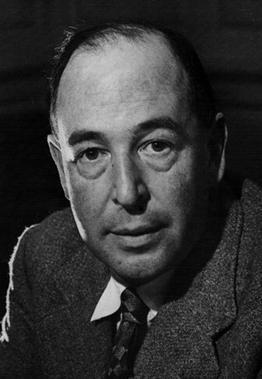
I have not done any kind of scientific study on this, but I am willing to go on record here as saying that C.S. Lewis is the most quoted non-Mormon non-scriptural person in the entire realm of LDS discourses. Hardly a month goes by when I don't hear his name at least once in a sacrament meeting talk or Sunday School lesson. And I am almost 100% sure that at some point this weekend, some GA will not be able to resist the urge to quote him. At this point, I almost giggle every time I hear it.
I must confess here that I have not read much of Lewis' work. I have not read his two most famous "Christian" works- Mere Christianity and The Screwtape Letters and only barely made it through two or three of the Narnia books as a boy. Nevertheless, even if Lewis is only deserving of half of his reputation, he would likely still rank as one of the great writers and thinkers of modern Christianity.
But none of this quite explains the acute Mormon affinity for quoting him. There are plenty of great Christian writers and thinkers that Latter-day Saints don't go out of their way to embrace. Why other Christians like him is perfectly understandable- he is one of their own. He speaks their language and defends their cause. But what of ourselves? Do his works have a particular resonance with Mormon doctrine, either official or popular? (And if so, how has this point remained so well-hidden from the rest of "orthodox" Christendom? I mean, if the Mormons like him so much, something has to be wrong with him, right?) What was C.S. Lewis' opinion of Mormons or Mormon doctrine, if he had one at all?
Perhaps C.S. Lewis puts the broader "Christian" cause so eloquently, and we therefore crave his words. This leads to the more troubling implication of this post, which is: why have we not produced a C.S. Lewis of our own, someone whose writings can articulate Mormonism so well for a broad audience? Part of it, of course is structural- no one outside of the Church leadership would dare to set themselves up as the go-to thinker on Mormonism and no one within the leadership is trusted enough by outsiders to give the story to them straight. But is there anything else that is holding us back? Especially after the year we've had (FLDS in Texas, Mitt Romney), we could use an eloquent and well-respected spokesman right about now.
30 September 2008
New Challenge to Politics Ban for Tax Exempt Entities - How will it affect the Church?
I saw the following story yesterday while reading the news: 33 Pastors Flout Tax Law with Political Sermons. Anyone who has spent long enough in the Bloggernacle, with the constant hand-wringing in some quarters over the Church losing its tax exemption due to interference in political issues such as Prop 8, is familiar with the basics. Section 501(c)(3) organizations, which are tax-exempt under federal law, may not participate in partisan political campaigns or risk losing their exempt status. What the above story reports is the next step in potentially eliminating this limitation.
This is a storm that has been brewing for some time in my mind. Religion and partisan politics have become increasingly intertwined in the last 20 or so years. (Duh) This years Republican primary process included one candidate who was a former pastor and did not seem to have completely left his old career behind him. The IRS has occasionally jumped on a church here or there for excessively politicizing its services (see the All Saints case from a couple of years ago for a particularly weak case that the IRS picked up), but to my knowledge such things are rare. But both pastors and politicians want to push this thing further. Hence, the above move to create a test case that would hopefully render the politics ban for tax-exempt institutions void by judicial order.
One can of course debate the merits of the politics ban. On one side, it is certainly an infringement of free speech- for many people, their religious beliefs both lead to certain positions on public issues, but also compel them to speak publicly about them. When individual members of a church do so, its OK, but when someone stands at a pulpit and does it, the IRS finds that unacceptable. On the other side, the politics ban insures that we are not giving a tax subsidy to organizations whose purposes are primarily partisan and political (501(c)(3) organizations include a wide variety of institutions). I can say that I have personally been grateful for the tax-exempt regulations on more than one occasion during my attendance at Church meetings.
Which brings me to the point that I really wanted to make here- if the politics ban on tax exempt entities disappears in a couple of months, what happens with the Church? Will it abandon its policy (pretense) of political neutrality or does it not depend on the threat of losing the tax exemption? Is there a doctrinal foundation for political neutrality standing apart from the preservation of the Church's tax exemption and if so, what is it?
As a final note, as someone who has studied the tax exempt issue in some depth, I do not buy into the arguments that the Church's tax exemption is already at risk due to its participation in campaigns such as Prop 8. So lets steer comments away from that and towards addressing the questions I asked above.
11 September 2008
The irony of Glenn Beck
Again, I give you all my sincerest apologies as my aforementioned bar-exam-related "brief hiatus" suddenly morphed into a new-baby-related break which ran into my new-job-related break and thus almost two months without a serious post.
I guess I was excited back in 2006 when I heard that an active Mormon was going to get his own prime-time news show on a major cable news network. I mean, since we lost Jane Clayson in the morning and Ken Jennings in primetime, major national television was relatively Mormon-free. Unfortunately, it only took a couple of episodes for the shine to wear off. I mean, I understand that bigotry and igorance is acceptable and practically de rigueur for talk radio these days, but on CNN HN. I mean, isn't Lou Dobbs enough for the Ted Turner media empire?!
Of course, he is obviously attracting some viewers since his show is still on the air, and based on conversations I've had, I think that a number of Mormons find his really-conservative-but-not-Republican shtick to be attractive. Which brings me to what is the somewhat confusing irony of Beck's notoriety: he is a terrible public example of a Mormon, and yet represents so many Mormons all too well. I think that his views on immigrants, Muslims, and climate change (among other issues) are perfectly appalling, but I fear that too many of my co-religionists hold similar sentiments. So do I lament Beck's fame as an public Mormon figure because I do not want either myself or my church to be painted with his brush, or rather do I lament the fact that he is so shockingly typical?
Subscribe to:
Posts (Atom)