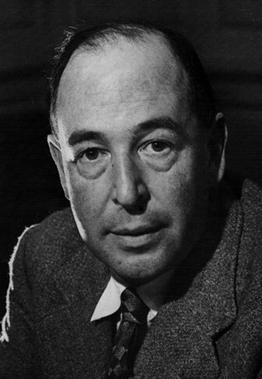
Just in time for General Conference, a brief observation about a man from whom we will undoubtedly hear on this sacred biannual occasion: C.S. Lewis.
I have not done any kind of scientific study on this, but I am willing to go on record here as saying that C.S. Lewis is the most quoted non-Mormon non-scriptural person in the entire realm of LDS discourses. Hardly a month goes by when I don't hear his name at least once in a sacrament meeting talk or Sunday School lesson. And I am almost 100% sure that at some point this weekend, some GA will not be able to resist the urge to quote him. At this point, I almost giggle every time I hear it.
I must confess here that I have not read much of Lewis' work. I have not read his two most famous "Christian" works- Mere Christianity and The Screwtape Letters and only barely made it through two or three of the Narnia books as a boy. Nevertheless, even if Lewis is only deserving of half of his reputation, he would likely still rank as one of the great writers and thinkers of modern Christianity.
But none of this quite explains the acute Mormon affinity for quoting him. There are plenty of great Christian writers and thinkers that Latter-day Saints don't go out of their way to embrace. Why other Christians like him is perfectly understandable- he is one of their own. He speaks their language and defends their cause. But what of ourselves? Do his works have a particular resonance with Mormon doctrine, either official or popular? (And if so, how has this point remained so well-hidden from the rest of "orthodox" Christendom? I mean, if the Mormons like him so much, something has to be wrong with him, right?) What was C.S. Lewis' opinion of Mormons or Mormon doctrine, if he had one at all?
Perhaps C.S. Lewis puts the broader "Christian" cause so eloquently, and we therefore crave his words. This leads to the more troubling implication of this post, which is: why have we not produced a C.S. Lewis of our own, someone whose writings can articulate Mormonism so well for a broad audience? Part of it, of course is structural- no one outside of the Church leadership would dare to set themselves up as the go-to thinker on Mormonism and no one within the leadership is trusted enough by outsiders to give the story to them straight. But is there anything else that is holding us back? Especially after the year we've had (FLDS in Texas, Mitt Romney), we could use an eloquent and well-respected spokesman right about now.
Woe unto you...for ye...have omitted the weightier matters of the law, judgment, mercy, and faith: these ought ye to have done, and not to leave the other undone. - Matthew 23:23
Showing posts with label theology. Show all posts
01 October 2008
19 July 2008
Faith and Knowledge Conference 2009 - Call for Papers
CALL FOR PAPERS
"Reconciliations and Reformulations":
A Conference for LDS Graduate Students in Religious Studies
Harvard University, February 20-21, 2009
Many Latter-day Saints experience their scholarship and their religion as clashing cultures, each with its competing values and contradictory conclusions. Religious studies students especially struggle to reconcile their faith and the knowledge they acquire in graduate school. The forms this reconciliation takes (including the failure to achieve reconciliation) become crucial episodes in a student's life history. The purpose of the Faith and Knowledge Conference for 2009 is to provide a forum for exploring these attempts at reconciliation.
We invite paper proposals from graduate students in religious studies and other related fields in the following four categories:
I. Gender and Sexuality
The academic discipline of religion is interacting more and more with methodologies and theories borrowed from gender and sexuality studies. As LDS scholars, to what extent do we engage in or disregard these methodologies? Can we take more expansive views of homosexuality, feminism, and other related issues than Mormon theology traditionally does without compromising our faith? Can feminist theology, queer theory, and similar approaches be useful to LDS scholars or must they be rejected altogether? How do more traditional viewpoints inform our academic scholarship, and how may the more expansive contemporary views of such issues inform both our academic scholarship and our understanding of the Gospel? Is reconciliation possible (or even needed) between these academic paradigms and the faith of the LDS scholar?
II. Scripture
LDS scholars commonly perceive a tension between "academic" and "devotional" approaches to scripture. Can scholarly methodologies (the historical-critical method, literary criticism, etc.) be usefully incorporated into the study or interpretation of LDS scripture, both ancient and modern, or must they be abandoned or subordinated to faith-based understandings? What investments do LDS scholars of scripture bring to the academic table and in what ways do they manifest themselves in productive or unproductive ways in LDS scholarship? Can academic approaches to the Bible be helpful in the study of revealed scripture, and if so, do they require some kinds of reconciliations or transformations? Is there and/or should there be a unique LDS scriptural hermeneutic, and what would it look like?
III. Pluralism
The approaches of religions to their own truth-claims may be divided into three categories: exclusivist religions, which assert that theirs is the sole bearer of truth and salvation; inclusivist religions, which recognize that other traditions possess enough truth to qualify them for salvation; and finally, pluralist religions, which hold that all traditions are equal paths to God. In a time of globalization, Latter-day Saint interactions with other religions, both Christian and non-Christian, raise questions about our view of ourselves. As we learn to appreciate the depth of other religious traditions, we wonder if our exclusivist view on truth is sustainable and defensible. How do we react to the theological and political dilemmas that exclusive claims to salvation through Jesus Christ or through Mormon rituals entail? Can a Mormon pluralism exist, or must we take on the burden of exclusivism?
IV. The Place of Religious Scholarship in the Church
Religious scholars and scholarship occupy an ambiguous role in the Church. Religious scholarship is cited when it supports Church teachings but rejected when it suggests that Church positions may be problematic. Moreover, the scholar who raises questions of this find falls under suspicion. Given current Church culture, what can an LDS scholar of religion bring to the table? Can a scholar utilize his/her tools and scholarship in a pastoral role? Can LDS religious scholars work to remove the stigma in the Church associated with the academic study of religion, and especially the academic study of Mormonism? Specifically, in what ways can areas of religious scholarship contribute positively to the spiritual and cultural life of the Church?
Panelist papers or presentations should last approximately 10 to 15 minutes. Short proposals (no more than 250 words) should be submitted via the conference website (http://www.faithandknowledge.org/submissions.php ) by OCTOBER 1, 2008.
Presenters will be notified by December 1, 2008. Conference participants will be eligible to apply for financial assistance with travel and lodging expenses.
Please send further inquiries about to the conference to
org@faithandknowledge.org.
"Reconciliations and Reformulations":
A Conference for LDS Graduate Students in Religious Studies
Harvard University, February 20-21, 2009
Many Latter-day Saints experience their scholarship and their religion as clashing cultures, each with its competing values and contradictory conclusions. Religious studies students especially struggle to reconcile their faith and the knowledge they acquire in graduate school. The forms this reconciliation takes (including the failure to achieve reconciliation) become crucial episodes in a student's life history. The purpose of the Faith and Knowledge Conference for 2009 is to provide a forum for exploring these attempts at reconciliation.
We invite paper proposals from graduate students in religious studies and other related fields in the following four categories:
I. Gender and Sexuality
The academic discipline of religion is interacting more and more with methodologies and theories borrowed from gender and sexuality studies. As LDS scholars, to what extent do we engage in or disregard these methodologies? Can we take more expansive views of homosexuality, feminism, and other related issues than Mormon theology traditionally does without compromising our faith? Can feminist theology, queer theory, and similar approaches be useful to LDS scholars or must they be rejected altogether? How do more traditional viewpoints inform our academic scholarship, and how may the more expansive contemporary views of such issues inform both our academic scholarship and our understanding of the Gospel? Is reconciliation possible (or even needed) between these academic paradigms and the faith of the LDS scholar?
II. Scripture
LDS scholars commonly perceive a tension between "academic" and "devotional" approaches to scripture. Can scholarly methodologies (the historical-critical method, literary criticism, etc.) be usefully incorporated into the study or interpretation of LDS scripture, both ancient and modern, or must they be abandoned or subordinated to faith-based understandings? What investments do LDS scholars of scripture bring to the academic table and in what ways do they manifest themselves in productive or unproductive ways in LDS scholarship? Can academic approaches to the Bible be helpful in the study of revealed scripture, and if so, do they require some kinds of reconciliations or transformations? Is there and/or should there be a unique LDS scriptural hermeneutic, and what would it look like?
III. Pluralism
The approaches of religions to their own truth-claims may be divided into three categories: exclusivist religions, which assert that theirs is the sole bearer of truth and salvation; inclusivist religions, which recognize that other traditions possess enough truth to qualify them for salvation; and finally, pluralist religions, which hold that all traditions are equal paths to God. In a time of globalization, Latter-day Saint interactions with other religions, both Christian and non-Christian, raise questions about our view of ourselves. As we learn to appreciate the depth of other religious traditions, we wonder if our exclusivist view on truth is sustainable and defensible. How do we react to the theological and political dilemmas that exclusive claims to salvation through Jesus Christ or through Mormon rituals entail? Can a Mormon pluralism exist, or must we take on the burden of exclusivism?
IV. The Place of Religious Scholarship in the Church
Religious scholars and scholarship occupy an ambiguous role in the Church. Religious scholarship is cited when it supports Church teachings but rejected when it suggests that Church positions may be problematic. Moreover, the scholar who raises questions of this find falls under suspicion. Given current Church culture, what can an LDS scholar of religion bring to the table? Can a scholar utilize his/her tools and scholarship in a pastoral role? Can LDS religious scholars work to remove the stigma in the Church associated with the academic study of religion, and especially the academic study of Mormonism? Specifically, in what ways can areas of religious scholarship contribute positively to the spiritual and cultural life of the Church?
Panelist papers or presentations should last approximately 10 to 15 minutes. Short proposals (no more than 250 words) should be submitted via the conference website (http://www.faithandknowledge.
Presenters will be notified by December 1, 2008. Conference participants will be eligible to apply for financial assistance with travel and lodging expenses.
Please send further inquiries about to the conference to
org@faithandknowledge.org.
13 April 2008
Holy scripture, holy myth (part III- the politics of the Bible)
This will be my final post in a three-part series about the way the Old Testament is, and perhaps ought to be, interpreted in the LDS Church. Here I will explore possible reasons why the Latter-day Saints and the Church have been slow to embrace new scholarly theories about the Bible and why this fact is not likely to change in the near future.
Keep your friends close...
My Hebrew Bible/Old Testament professor often refers to the "politics of Biblical studies." This concept does not refer to American partisan politics (though it certainly may have some application there), but is equally if not more vehement in its division. The politics of Biblical studies has to do with how various parties use and interpret the Bible to (dis)establish its authority. On one side, you have the stalwart Bible fundamentalists, fearlessly defending biblical inerrancy and the God-given authority of the Bible to resolve all of our concerns in the modern age. On the other, there is another group, mostly secular academics, who are more willing to give naturalistic explanations for the Bible's content and any number of justifications for why its authority on us today ought to be limited, if not eliminated completely. Of course, rather than simply being two camps, these groups form two extremes on a spectrum.
My question is why have Latter-day Saints been so slow to adopt new theories about the Bible and, in spite of a lack of belief in biblical inerrancy, tended to side with the Christian fundamentalists on issues of the Bible's history, and therefore its authority in our individual and communal lives? My own answer is to say that the club that Mormons most want to join is the "mainstream Christian" club, not the secular intellectual club. The Mormon angst over the constant refrain of "Mormons are not Christians" echoing from the South and Midwest is practically palpable. The folks holding the veto power over our inclusion are of course the Southern Baptists and Evangelicals, precisely the people who want to maximize the Bible's modern authority. Adopting new theories about the history and content of the Bible almost invariably tends to limit its authority (though I hope to have shown in earlier posts in this series why that is not absolutely necessary). Therefore, embracing any such theory would simply give the "Bible-maximalists" that much more ammunition to say "Just as we thought! We knew you weren't Christian!" Accepting both the Book of Mormon, other modern scripture, and continuing revelation as sources of doctrinal authority on par or above with the Bible means that we already have two strikes against us. Any kind of rhetoric that would denigrate the place and the authority of the Bible among our people would, in the eyes of those so eager to make nice, be the final straw. This is, of course, what Elder Ballard's talk at the April 2007 GC was all about. In my mind, that talk was entirely aimed at redressing an imbalance in scriptural emphases that had started with Ezra Taft Benson's increased emphasis on the Book of Mormon in the 1980s. The pendulum had swung too far towards the Book of Mormon and the membership of the Church was neglecting the Bible. Our tenuous membership in the "Christian club" would be in serious jeopardy unless we gently coaxed the pendulum back in the direction of the Bible.
The BYU Connection
The foregoing was an example of the ideological reasons why I think that the way that ancient scripture, and in particular the Bible, is taught and interpreted in the LDS Church is unlikely to change in the near future. What follows is a related, but more practical, reason.Another facet of this issue is how the Bible is treated by Church educators. In my own mind, the most important sources for our doctrine on the scriptures and their interpretation are: 1) the General Authorities, 2) the Religious Education faculty at BYU, and 3) the Church Education System. (In one of my early posts on this blog, I explained how the BYU faculty and CES serve as separate loci of doctrine-making authority within the Church, alongside the General Authorities) What we receive in classes in individual wards and branches is almost certainly filtered in some way through one if not all of these sources.
Why the General Authorities do not adopt these secular theories is a no-brainer: most, if not all of them, are completely unfamiliar with such theories. Running the Church does not exactly leave a lot of time for "light reading" in scholarly journals and manuscripts in ancient languages. Besides, from a market-oriented perspective, demand for pure scriptural "knowledge" is quite low in the Church. We generally expect GAs to help us "feel" something rather than teach us facts. The same can generally be said of CES personnel, who in general are not required to have much if any training beyond a bachelor's degree and some Church-sponsored courses.
However, we could expect more of those who teach in Religious Education at BYU, who presumably ought to have the advanced training and skills to learn and impart this information. First of all, as a general matter, this matter of their superior qualifications and training may not be true. Reviewing the qualifications of BYU faculty shows that not all have advanced degrees in relevant fields (OT, NT, other ancient studies fields), and fewer have those advanced degrees from institutions other than BYU (after all, you can't teach what you don't know). Further those who do receive advanced education from institutions other than BYU return to Provo and are routinely socialized into an environment where their secular qualifications and methods are devalued, if not looked at with suspicion and mistrust. Their fellow BYU colleagues are their most significant peers and since BYU Religious Ed faculty do not, as a rule, tend to move on to other colleges, they begin teaching and writing to the expectations of the Provo clique rather than to those of the scholarly world at large. Also, the College of Religious Education is currently directed by someone with a CES background, and thus he and the department he leads can be expected to embody the biases of that institution. Therefore, it may be unreasonable to expect that the members of the faculty will offer content that differs significantly from the CES-Correlation orthodoxy.
In my personal opinion, the ideas about the historical or mythical nature of scritpure that I have laid out in previous posts in this series are worthy of analysis and discussion by members of the Church, even stopping short of outright acceptance. (If I did not think so, I would not have written about them. I am emphatically NOT doing this simply to stir up unnecessary controversy.) But we don't, at least not currently in any Church-sponsored forum with which I am familiar. Furthermore, those forums where such discussions might take place (Sunstone, Dialogue, the Bloggernacle, etc.) are looked down upon by those most in a position to change the status quo. I think that there are reasons, good and bad, for this, and I have laid out a couple of them here. I would be interested to see whether anyone else sees any merit in changing the way we teach ancient scripture and what the prospects are for such change in the near future (say, our lifetimes).
Post-script: I had this post half-formed in my mind as of last weekend's General Conference, and I have left the above part as it was at that time. However, Elder Holland's talk "My Words...Never Cease" would seem to refute some portion of my hypothesis. Here we have a General Authority, no less an Apostle, making direct or indirect references to two very scholarly ideas (albeit ones in no way antagonistic to LDS claims) in his address: Markan priority and Q (sayings of Jesus). For those who were previously familiar with such ideas, like myself, it was quite shocking to hear them over the pulpit, primarily as a result of my own deflated expectations. However, in the long run I doubt that it changes much. Those who were not familiar with those ideas previously may have simply ignored it. A couple of intrepid and curious souls may have the audacity to ask questions in Church settings or look up something on the Internet or at a nearby library. Hardly a revolution...
Keep your friends close...
My Hebrew Bible/Old Testament professor often refers to the "politics of Biblical studies." This concept does not refer to American partisan politics (though it certainly may have some application there), but is equally if not more vehement in its division. The politics of Biblical studies has to do with how various parties use and interpret the Bible to (dis)establish its authority. On one side, you have the stalwart Bible fundamentalists, fearlessly defending biblical inerrancy and the God-given authority of the Bible to resolve all of our concerns in the modern age. On the other, there is another group, mostly secular academics, who are more willing to give naturalistic explanations for the Bible's content and any number of justifications for why its authority on us today ought to be limited, if not eliminated completely. Of course, rather than simply being two camps, these groups form two extremes on a spectrum.
My question is why have Latter-day Saints been so slow to adopt new theories about the Bible and, in spite of a lack of belief in biblical inerrancy, tended to side with the Christian fundamentalists on issues of the Bible's history, and therefore its authority in our individual and communal lives? My own answer is to say that the club that Mormons most want to join is the "mainstream Christian" club, not the secular intellectual club. The Mormon angst over the constant refrain of "Mormons are not Christians" echoing from the South and Midwest is practically palpable. The folks holding the veto power over our inclusion are of course the Southern Baptists and Evangelicals, precisely the people who want to maximize the Bible's modern authority. Adopting new theories about the history and content of the Bible almost invariably tends to limit its authority (though I hope to have shown in earlier posts in this series why that is not absolutely necessary). Therefore, embracing any such theory would simply give the "Bible-maximalists" that much more ammunition to say "Just as we thought! We knew you weren't Christian!" Accepting both the Book of Mormon, other modern scripture, and continuing revelation as sources of doctrinal authority on par or above with the Bible means that we already have two strikes against us. Any kind of rhetoric that would denigrate the place and the authority of the Bible among our people would, in the eyes of those so eager to make nice, be the final straw. This is, of course, what Elder Ballard's talk at the April 2007 GC was all about. In my mind, that talk was entirely aimed at redressing an imbalance in scriptural emphases that had started with Ezra Taft Benson's increased emphasis on the Book of Mormon in the 1980s. The pendulum had swung too far towards the Book of Mormon and the membership of the Church was neglecting the Bible. Our tenuous membership in the "Christian club" would be in serious jeopardy unless we gently coaxed the pendulum back in the direction of the Bible.
The BYU Connection
The foregoing was an example of the ideological reasons why I think that the way that ancient scripture, and in particular the Bible, is taught and interpreted in the LDS Church is unlikely to change in the near future. What follows is a related, but more practical, reason.Another facet of this issue is how the Bible is treated by Church educators. In my own mind, the most important sources for our doctrine on the scriptures and their interpretation are: 1) the General Authorities, 2) the Religious Education faculty at BYU, and 3) the Church Education System. (In one of my early posts on this blog, I explained how the BYU faculty and CES serve as separate loci of doctrine-making authority within the Church, alongside the General Authorities) What we receive in classes in individual wards and branches is almost certainly filtered in some way through one if not all of these sources.
Why the General Authorities do not adopt these secular theories is a no-brainer: most, if not all of them, are completely unfamiliar with such theories. Running the Church does not exactly leave a lot of time for "light reading" in scholarly journals and manuscripts in ancient languages. Besides, from a market-oriented perspective, demand for pure scriptural "knowledge" is quite low in the Church. We generally expect GAs to help us "feel" something rather than teach us facts. The same can generally be said of CES personnel, who in general are not required to have much if any training beyond a bachelor's degree and some Church-sponsored courses.
However, we could expect more of those who teach in Religious Education at BYU, who presumably ought to have the advanced training and skills to learn and impart this information. First of all, as a general matter, this matter of their superior qualifications and training may not be true. Reviewing the qualifications of BYU faculty shows that not all have advanced degrees in relevant fields (OT, NT, other ancient studies fields), and fewer have those advanced degrees from institutions other than BYU (after all, you can't teach what you don't know). Further those who do receive advanced education from institutions other than BYU return to Provo and are routinely socialized into an environment where their secular qualifications and methods are devalued, if not looked at with suspicion and mistrust. Their fellow BYU colleagues are their most significant peers and since BYU Religious Ed faculty do not, as a rule, tend to move on to other colleges, they begin teaching and writing to the expectations of the Provo clique rather than to those of the scholarly world at large. Also, the College of Religious Education is currently directed by someone with a CES background, and thus he and the department he leads can be expected to embody the biases of that institution. Therefore, it may be unreasonable to expect that the members of the faculty will offer content that differs significantly from the CES-Correlation orthodoxy.
In my personal opinion, the ideas about the historical or mythical nature of scritpure that I have laid out in previous posts in this series are worthy of analysis and discussion by members of the Church, even stopping short of outright acceptance. (If I did not think so, I would not have written about them. I am emphatically NOT doing this simply to stir up unnecessary controversy.) But we don't, at least not currently in any Church-sponsored forum with which I am familiar. Furthermore, those forums where such discussions might take place (Sunstone, Dialogue, the Bloggernacle, etc.) are looked down upon by those most in a position to change the status quo. I think that there are reasons, good and bad, for this, and I have laid out a couple of them here. I would be interested to see whether anyone else sees any merit in changing the way we teach ancient scripture and what the prospects are for such change in the near future (say, our lifetimes).
Post-script: I had this post half-formed in my mind as of last weekend's General Conference, and I have left the above part as it was at that time. However, Elder Holland's talk "My Words...Never Cease" would seem to refute some portion of my hypothesis. Here we have a General Authority, no less an Apostle, making direct or indirect references to two very scholarly ideas (albeit ones in no way antagonistic to LDS claims) in his address: Markan priority and Q (sayings of Jesus). For those who were previously familiar with such ideas, like myself, it was quite shocking to hear them over the pulpit, primarily as a result of my own deflated expectations. However, in the long run I doubt that it changes much. Those who were not familiar with those ideas previously may have simply ignored it. A couple of intrepid and curious souls may have the audacity to ask questions in Church settings or look up something on the Internet or at a nearby library. Hardly a revolution...
20 March 2008
The Incredible Shrinking Endowment
My wife and I went to the temple last night. Another change to the endowment ceremony was announced. Due to explicit instructions by the First Presidency in the announcement, I won't discuss details (though I have registered my frustration with this non-essential secrecy in another post). Safe to say that it is nothing serious, and I am not sure anyone can argue with me on that.
However, it got me thinking about temple ceremony changes in the future. Looking across the ordinances, baptism takes about 30 seconds, confirmation about the same, initiatory takes about 5 minutes, and the sealing takes about 2 minutes (at least when doing vicarious ordinances). But the endowment takes a whopping hour and a half, maybe longer. I have always felt like as temple work accelerated in the Millennium, the ordinance itself would get much shorter. What do you think?
Since we can't talk about it, I won't ask what you think the "irreducible core" of the endowment ordinance is, but it is worth thinking about.
However, it got me thinking about temple ceremony changes in the future. Looking across the ordinances, baptism takes about 30 seconds, confirmation about the same, initiatory takes about 5 minutes, and the sealing takes about 2 minutes (at least when doing vicarious ordinances). But the endowment takes a whopping hour and a half, maybe longer. I have always felt like as temple work accelerated in the Millennium, the ordinance itself would get much shorter. What do you think?
Since we can't talk about it, I won't ask what you think the "irreducible core" of the endowment ordinance is, but it is worth thinking about.
02 March 2008
Holy scripture, holy myth (part II- the Book of Mormon)
My wife tells me that the previous post was too long and that the lack of comments doesn't mean it wasn't interesting, only that people were too exhausted by reading to the end in order to comment. So I have chosen to break up the promised Part II into several sub-parts which should appear in the next few days/weeks. For those of you who missed it, in Part I, I discussed how there is a school of OT scholarship that holds that several narratives in the OT are not in fact historical, but rather mythical. I am primarily interested in how this affects LDS and our particular beliefs about these narratives and their value. Now I intend to address how the Book of Mormon might address these issues.
The first thing to point out is that the Nephites obviously believed many of the challenged narratives that I discussed in part I, namely the story of the Exodus and Joseph in Egypt. I guess that it all goes back to exactly what was on the plates that Nephi got from Laban. I don't want to burst anyone's bubble but chances are it was not the OT as we now have it, or even our present OT + a couple of new books like Zenos and Zenock. First of all, many of the later prophets did not even live until during and after the Babylonian Captivity (think Ezra, Ezequiel). Second, even the extant OT "books" would have appeared in some other form at that time. Some of Isaiah might not have existed (Deutero-Isaiah, and the possible Third Isaiah). In the Pentateuch, the Yahwist (J) and Elohist (E) sources would be present, but the Deuteronomist (D) source would be quite recent, and the Priestly (P) source is not composed for another two hundred years after Lehi and his family leave (though the P source contains lots of genealogy and the brass plates evidently had some of that). As a side note, I think that the later "pride cycle" organization of Mormon's recompilation of the Nephite sources shows familiarity with the Deuteronomistic History, so I think that a good deal of the D source is on the plates. The Joseph novella was its own distinct source and probably was composed early enough to make it onto the plates. So I do not believe that there are any problems believing that the OT stories referred to in the Book of Mormon could have been on the plates at the time that Nephi got them from Laban.
Nephi and Lehi obviously believed these stories, since they are cited extensively as evidence of God's existence, his power, and his concern for the people of Israel. The Exodus, and particularly God's mighty acts in delivering captive Israel from Egypt and bringing them into Canaan, are frequently used in this way. Joseph's prophecies (later received by Joseph Smith alongside the materials that would become the Book of Abraham) are said by Lehi to be among the greatest ever. However, just because Lehi and Nephi believed that these events occurred is not irrefutable evidence of their historicity. Neither would have lived until at least 600-1000 years after either event, and the narratives and their place in Jewish lore would be well established and settled by the time Lehi and Nephi came about. To paraphrase another blogger, just because Pres. Monson tells a story about Jean Valjean in conference does not mean that Jean Valjean really existed. As I alluded to in my previous post, I don't think that this fact either destroys the OT or the BoM as a useful source to gain knowledge about the Gospel or our Heavenly Father. These possibly mythical narratives arise as a method to teach deeply-held spiritual values, and they do that just as well as myth as if they were historical. Incidentally, if Lehi and Nephi believed that the narratives were true and taught them as such, it goes without saying that succeeding generations (i.e. Alma) would feel free to quote them as such.
The first thing to point out is that the Nephites obviously believed many of the challenged narratives that I discussed in part I, namely the story of the Exodus and Joseph in Egypt. I guess that it all goes back to exactly what was on the plates that Nephi got from Laban. I don't want to burst anyone's bubble but chances are it was not the OT as we now have it, or even our present OT + a couple of new books like Zenos and Zenock. First of all, many of the later prophets did not even live until during and after the Babylonian Captivity (think Ezra, Ezequiel). Second, even the extant OT "books" would have appeared in some other form at that time. Some of Isaiah might not have existed (Deutero-Isaiah, and the possible Third Isaiah). In the Pentateuch, the Yahwist (J) and Elohist (E) sources would be present, but the Deuteronomist (D) source would be quite recent, and the Priestly (P) source is not composed for another two hundred years after Lehi and his family leave (though the P source contains lots of genealogy and the brass plates evidently had some of that). As a side note, I think that the later "pride cycle" organization of Mormon's recompilation of the Nephite sources shows familiarity with the Deuteronomistic History, so I think that a good deal of the D source is on the plates. The Joseph novella was its own distinct source and probably was composed early enough to make it onto the plates. So I do not believe that there are any problems believing that the OT stories referred to in the Book of Mormon could have been on the plates at the time that Nephi got them from Laban.
Nephi and Lehi obviously believed these stories, since they are cited extensively as evidence of God's existence, his power, and his concern for the people of Israel. The Exodus, and particularly God's mighty acts in delivering captive Israel from Egypt and bringing them into Canaan, are frequently used in this way. Joseph's prophecies (later received by Joseph Smith alongside the materials that would become the Book of Abraham) are said by Lehi to be among the greatest ever. However, just because Lehi and Nephi believed that these events occurred is not irrefutable evidence of their historicity. Neither would have lived until at least 600-1000 years after either event, and the narratives and their place in Jewish lore would be well established and settled by the time Lehi and Nephi came about. To paraphrase another blogger, just because Pres. Monson tells a story about Jean Valjean in conference does not mean that Jean Valjean really existed. As I alluded to in my previous post, I don't think that this fact either destroys the OT or the BoM as a useful source to gain knowledge about the Gospel or our Heavenly Father. These possibly mythical narratives arise as a method to teach deeply-held spiritual values, and they do that just as well as myth as if they were historical. Incidentally, if Lehi and Nephi believed that the narratives were true and taught them as such, it goes without saying that succeeding generations (i.e. Alma) would feel free to quote them as such.
21 February 2008
Holy scripture, holy myth (part I)
My present intention is to make this a three-part series of posts about some recent reflections on the meaning and purpose of the scriptures. This initial post will focus on the Hebrew Bible/Old Testament (HB/OT). A follow-up will introduce additional issues that the Book of Mormon narrative adds to complicate my thoughts from post #1. The third post will discuss how what I have set forth in post #1 might explain (or affect) the way that we teach scripture in the Church.
Since this semester is my last one at a university (at least in the foreseeable future), I chose to take an undergraduate-level course in the Hebrew Bible/Old Testament, in part because I knew so little about it and in part because I so desperately needed to get outside of the law school for an intellectual experience. I chose an undergraduate course simply because the sum total of my exposure to the OT is limited to whatever I have heard or discussed in Sunday School every four years. My professor takes a secular and academic approach to the HB/OT, which is entirely appropriate given the setting. It has definitely been a different experience from your typical Mormon Sunday School class (and for that matter, any Sunday School class I ever attended prior to joining the Church). By writing what follows, I don't mean to endorse any of these theories or hypotheses. I agree with some, but am undecided on many others. I simply mean to explore our notions of the historicity of scripture with what contemporary HB/OT scholarship might be able to tell us (or what it cannot tell us).
The main theme that I wish to address is how the HB/OT breaks down into history or myth. Due to Latter-day Saints' general rejection of the infallibility or inerrancy of the Bible, the introduction of mythic elements to our scripture should not bother one much. However, exactly where that division occurs is not entirely clear, neither to me nor to most of the scholars who have devoted years to understanding this complex work. My own sense is that the historicity of much of the HB/OT is not important to the truth of the Restoration. Acknowledging the mythic elements of these important stories can be very disconcerting at first, especially to one who has grown up with these stories and characters. However, in my opinion, the fact that some of the HB/OT is myth rather than history provides no grounds for a rejection of the Restoration of the Gospel through Joseph Smith. Apart from its literal historicity, the HB/OT can still tell us important things about our Heavenly Father's relationship to his sons and daughters, our relationships among ourselves, and God's plan for his creations.
In the time and space available to me, I could not possibly go through the entire HB/OT. Instead, I have chosen to pick out a couple of major instances of this phenomenon to illustrate my thesis. I also can't lay out all of the evidence for the assertions I am making, but I will point you to the textbooks I am using if you need to see it for yourself.
For example, there is little or no extra-biblical evidence for the Exodus, at least as it is told by the Book of Exodus. There is likewise no extra-biblical evidence for the figures of Abraham, Issac, and Jacob. The first relatively certain historical event that we have recounted in the HB/OT is the establishment of the United Monarchy under David and his son, Solomon. From there on, things get more and more concrete. Further back from that point (around 1000 BCE), it becomes more and more difficult to tell where history begins and myth ends.
The Exodus and Conquest- Scholars generally reject the idea that somebody named Moses liberated a bunch of Hebrew slaves and took over 600,000 of them (about 2 million with women and children) wandering in the desert, eventually coming to conquer and settle in Canaan under the leadership of Joshua. Alternative theories that have been proposed include: a small group of slaves escaped from Egypt and came and instigated a revolt in Canaan, eventually taking over. There is some material evidence for the presence of Semitic slaves in Egypt during certain periods, but no Egyptian record of a mass exodus. Furthermore, many are comfortable with the notion that some Hebrew slaves came out of Egypt simply because it does not make much sense to make that embarrassing incident part of your history if it simply is not true. On balance, I am willing to say that the Exodus, on the scale recounted in the book of Exodus, did not happen.
My point is, if the Exodus is not historical...so what? I cannot think of any core tenet of the Restoration that hinges on this fact. We certainly tell stories about Moses parting the Red Sea (also questionable) as an example of faith and the power of God. If these events never happened, those stories function equally well as myth and does NOT mean that God lacks the power to do them. (The story of Moses parting the Red Sea also shows up in the Book of Mormon, but my discussion of that will appear in part II of this series).
Where things get problematic is where certain stories or characters who are extremely important to Mormon belief get thrown to the myth side of the equation.
Abraham, Isaac, and Jacob + the Twelve Tribes- There is generally little in the way of evidence to suggest that Abraham, Isaac, or Jacob, or any of the Jacob/Israel's twelve sons were historical figures. Most of the events of their lives were private intrafamilial happenings and so it is not surprising that no extra-biblical evidence exists to substantiate them. Such persons could have plausibly existed. However, the narratives we have of their lives are composite in nature (see the Documentary Hypothesis) as is most of the Pentateuch, meaning that different stories (probably from different oral tradition) were woven together over time to form the version that we now have.
It is also believed by some that the twelve tribes that come to compose the nation of Israel are not in fact the biological sons of Jacob/Israel, but merely twelve tribes that united in Canaan under the worship of YHWH. Under this theory, the stories of Abraham, Isaac, and Jacob would be etiologies, or stories of how certain people(s)/tribe(s) came to be. The patriarchal story would have explained to the Israelites that they were kin rather than simply political allies.
I can ask the same question of this as I did of the Exodus above- if not true, then so what? Unfortunately the answer is much more complex here. Mormons have a great deal invested in the figures of the patriarchs and the Twelve Tribes. In the temple, we are given the blessings of Abraham, Isaac, and Jacob. In our patriarchal blessings, we are declared to be of their lineage and are named to be a part of one of the tribes of Israel. Our notions of eternal marriage are closely tied up with the Abrahamic covenant. So it becomes much more difficult for us to cut ties with the patriarchs than with the Exodus, or with a global Flood. Nevertheless, in spite of its difficulties, I could imagine a non-literal reading of these narratives that nevertheless affirmed the truth of the Restoration (Incidentally, my wife, in her Ph.D. program, has studied all of the numerous ways that early Christian theologians discarded the literal truth of the patriarchs and "spiritualized" or allegorized their biographies). Even if Abraham did not exist, the fact that we call the covenant of eternal marriage along with other covenants the "blessings of Abraham" does not make them any less real. I do not think that we really believe that these blessings originated with him in the first place. His narrative is simply a shortcut for us to explain the meaning of the covenant. Similar to this is the way we call the higher priesthood after Melchezidek- he was not the first, but he was exemplary of it. I am not sure what to make of the twelve tribes, if they are not in fact historical. The importance of tribes seems to be declining in the global Church anyway, so it may be moot. Still, Abraham seems such a key figure in our theology that doing away with his historical reality would seem so much more problematic than many other HB/OT personages and stories.
I could go on for a long time about this, but I would rather here from you. Am I missing something here? Would introducing mythic elements into the HB/OT completely destroy the Gospel? If you have any specific instances, I would be happy to hear them. I am still making up my mind about all of this, so I would be happy to get any input I could.
I promised to disclose the textbooks I am using, so here they are: Ancient Israel: From Abraham to the Roman Destruction of the Temple (Revised and Expanded) ed. Hershel Shanks and The Old Testament: An Introduction to the Hebrew Bible (2nd ed.) by Stephen L. Harris and Robert L. Platzner.
Since this semester is my last one at a university (at least in the foreseeable future), I chose to take an undergraduate-level course in the Hebrew Bible/Old Testament, in part because I knew so little about it and in part because I so desperately needed to get outside of the law school for an intellectual experience. I chose an undergraduate course simply because the sum total of my exposure to the OT is limited to whatever I have heard or discussed in Sunday School every four years. My professor takes a secular and academic approach to the HB/OT, which is entirely appropriate given the setting. It has definitely been a different experience from your typical Mormon Sunday School class (and for that matter, any Sunday School class I ever attended prior to joining the Church). By writing what follows, I don't mean to endorse any of these theories or hypotheses. I agree with some, but am undecided on many others. I simply mean to explore our notions of the historicity of scripture with what contemporary HB/OT scholarship might be able to tell us (or what it cannot tell us).
The main theme that I wish to address is how the HB/OT breaks down into history or myth. Due to Latter-day Saints' general rejection of the infallibility or inerrancy of the Bible, the introduction of mythic elements to our scripture should not bother one much. However, exactly where that division occurs is not entirely clear, neither to me nor to most of the scholars who have devoted years to understanding this complex work. My own sense is that the historicity of much of the HB/OT is not important to the truth of the Restoration. Acknowledging the mythic elements of these important stories can be very disconcerting at first, especially to one who has grown up with these stories and characters. However, in my opinion, the fact that some of the HB/OT is myth rather than history provides no grounds for a rejection of the Restoration of the Gospel through Joseph Smith. Apart from its literal historicity, the HB/OT can still tell us important things about our Heavenly Father's relationship to his sons and daughters, our relationships among ourselves, and God's plan for his creations.
In the time and space available to me, I could not possibly go through the entire HB/OT. Instead, I have chosen to pick out a couple of major instances of this phenomenon to illustrate my thesis. I also can't lay out all of the evidence for the assertions I am making, but I will point you to the textbooks I am using if you need to see it for yourself.
For example, there is little or no extra-biblical evidence for the Exodus, at least as it is told by the Book of Exodus. There is likewise no extra-biblical evidence for the figures of Abraham, Issac, and Jacob. The first relatively certain historical event that we have recounted in the HB/OT is the establishment of the United Monarchy under David and his son, Solomon. From there on, things get more and more concrete. Further back from that point (around 1000 BCE), it becomes more and more difficult to tell where history begins and myth ends.
The Exodus and Conquest- Scholars generally reject the idea that somebody named Moses liberated a bunch of Hebrew slaves and took over 600,000 of them (about 2 million with women and children) wandering in the desert, eventually coming to conquer and settle in Canaan under the leadership of Joshua. Alternative theories that have been proposed include: a small group of slaves escaped from Egypt and came and instigated a revolt in Canaan, eventually taking over. There is some material evidence for the presence of Semitic slaves in Egypt during certain periods, but no Egyptian record of a mass exodus. Furthermore, many are comfortable with the notion that some Hebrew slaves came out of Egypt simply because it does not make much sense to make that embarrassing incident part of your history if it simply is not true. On balance, I am willing to say that the Exodus, on the scale recounted in the book of Exodus, did not happen.
My point is, if the Exodus is not historical...so what? I cannot think of any core tenet of the Restoration that hinges on this fact. We certainly tell stories about Moses parting the Red Sea (also questionable) as an example of faith and the power of God. If these events never happened, those stories function equally well as myth and does NOT mean that God lacks the power to do them. (The story of Moses parting the Red Sea also shows up in the Book of Mormon, but my discussion of that will appear in part II of this series).
Where things get problematic is where certain stories or characters who are extremely important to Mormon belief get thrown to the myth side of the equation.
Abraham, Isaac, and Jacob + the Twelve Tribes- There is generally little in the way of evidence to suggest that Abraham, Isaac, or Jacob, or any of the Jacob/Israel's twelve sons were historical figures. Most of the events of their lives were private intrafamilial happenings and so it is not surprising that no extra-biblical evidence exists to substantiate them. Such persons could have plausibly existed. However, the narratives we have of their lives are composite in nature (see the Documentary Hypothesis) as is most of the Pentateuch, meaning that different stories (probably from different oral tradition) were woven together over time to form the version that we now have.
It is also believed by some that the twelve tribes that come to compose the nation of Israel are not in fact the biological sons of Jacob/Israel, but merely twelve tribes that united in Canaan under the worship of YHWH. Under this theory, the stories of Abraham, Isaac, and Jacob would be etiologies, or stories of how certain people(s)/tribe(s) came to be. The patriarchal story would have explained to the Israelites that they were kin rather than simply political allies.
I can ask the same question of this as I did of the Exodus above- if not true, then so what? Unfortunately the answer is much more complex here. Mormons have a great deal invested in the figures of the patriarchs and the Twelve Tribes. In the temple, we are given the blessings of Abraham, Isaac, and Jacob. In our patriarchal blessings, we are declared to be of their lineage and are named to be a part of one of the tribes of Israel. Our notions of eternal marriage are closely tied up with the Abrahamic covenant. So it becomes much more difficult for us to cut ties with the patriarchs than with the Exodus, or with a global Flood. Nevertheless, in spite of its difficulties, I could imagine a non-literal reading of these narratives that nevertheless affirmed the truth of the Restoration (Incidentally, my wife, in her Ph.D. program, has studied all of the numerous ways that early Christian theologians discarded the literal truth of the patriarchs and "spiritualized" or allegorized their biographies). Even if Abraham did not exist, the fact that we call the covenant of eternal marriage along with other covenants the "blessings of Abraham" does not make them any less real. I do not think that we really believe that these blessings originated with him in the first place. His narrative is simply a shortcut for us to explain the meaning of the covenant. Similar to this is the way we call the higher priesthood after Melchezidek- he was not the first, but he was exemplary of it. I am not sure what to make of the twelve tribes, if they are not in fact historical. The importance of tribes seems to be declining in the global Church anyway, so it may be moot. Still, Abraham seems such a key figure in our theology that doing away with his historical reality would seem so much more problematic than many other HB/OT personages and stories.
I could go on for a long time about this, but I would rather here from you. Am I missing something here? Would introducing mythic elements into the HB/OT completely destroy the Gospel? If you have any specific instances, I would be happy to hear them. I am still making up my mind about all of this, so I would be happy to get any input I could.
I promised to disclose the textbooks I am using, so here they are: Ancient Israel: From Abraham to the Roman Destruction of the Temple (Revised and Expanded) ed. Hershel Shanks and The Old Testament: An Introduction to the Hebrew Bible (2nd ed.) by Stephen L. Harris and Robert L. Platzner.
Subscribe to:
Posts (Atom)